
Category Archives: Path of Exile 2

Path of Exile 2 Guide:How to Defeat Captain Hatterene in Act 4

Path of Exile 2 continues Grinding Gear Games legacy of brutal boss encounters, challenging players to learn mechanics, react quickly, and adapt their builds to overcome towering foes. One of the most memorable early bosses you’ll face in Act Four is Captain Hartlin, a tragic figure twisted into an undead monstrosity.

Captain Hartlin is introduced during the Dark Mists questline in Act Four. Lore-wise, he’s the long-lost son of Freya Hartlin, who tasks you with finding him in the fog-shrouded seas of Kedge Bay. Sadly, when you discover him in Journey Edge, it’s too late-Hartlin has been transformed into a grotesque undead, his body fused with nautical weaponry and cursed relics.

This fight is a turning point in Act Four, testing your ability to manage both single-target boss pressure and dangerous area mechanics.

As you progress through the fog-filled paths of Kedge Bay, you’ll eventually reach Journey Edge, a weathered battlefield where Hartlin awaits. The environment is open, giving him room to unleash his wide-area abilities, so positioning is vital.

The biggest hurdle in this fight is Hartlin physical resistance. Melee-focused builds will struggle unless they use armor-piercing skills or invest in powerful gear upgrades. Spellcasters, however, will find the fight more forgiving since Hartlin’s resistance to elemental magic is weaker.

Investing POE 2 Currency to upgrade your gems and gear-or even choosing to buy Path of Exile 2 Currency to fine-tune your build-can make a dramatic difference in this encounter.

Captain Hartlin Wheel Mechanic

The most unique feature of this fight is the captain wheel strapped around Hartlin neck. At any given moment, the top skull of the wheel glows one of three colors-Purple, Green, or Blue-which determines his next special attack. Hartlin will periodically spin the wheel during the fight to change the active color.

Additional Mechanics

Beyond his wheel-based specials, Captain Hartlin employs a mix of heavy-hitting nautical attacks:

Anchor Swing:A wide melee swing with his oversized anchor. Slow but punishing if mistimed.

Cannon Blast:A ranged shot from the small cannon mounted to his side. The projectile is quick but dodgeable if you stay alert.

At 33% health, Hartlin transitions into his ultimate phase:

“Fire in the Hole!” – Hartlin summons a circle of ghostly cannons around the arena, which bombard the field with explosive shots. The best counterplay is to move into the center of the circle and run in a tight loop. Doing so causes the cannonballs to overshoot and miss you entirely.

This final phase creates chaos but also signals that the end is near. Surviving the cannon barrage lets you finish him off.

Strategy Tips for Defeating Captain Hartlin

1.Bring Magic Damage-Fire, lightning, or chaos spells melt through his armor faster than physical damage.

2.Manage Minions Quickly-Use AoE or crowd-control Path of Exile 2 Items to prevent skeleton swarms from overwhelming you.

3.Punish Anchor Drop-After Hartlin casts Green Anchor Drop, he’s wide open. Use this downtime to unload your strongest cooldowns.

4.Stay Mobile-His slow speed belies the wide reach of his anchor swings and orb volleys. Constant strafing makes dodging easier.

5.Save Mobility Skills for Fire in the Hole-Use dashes or blink abilities to reposition during the cannon circle phase.

    Rewards for Defeating Captain Hartlin

    Upon victory, Captain Hartlin drops a pool of randomized loot typical of mid-act bosses. While no exclusive, unique item is tied to him, he always rewards:

    Verisium, a quest item required for progressing through Dark Mists.

    Rare gear with potential modifiers suited for upgrading your build.

    Currency items, offering a chance to restock before tackling the next zones of Act Four.

    While his loot table isn’t game-breaking, the guaranteed quest progression makes him an essential fight to clear.

    Beyond loot and quest progression, Hartlin is a mechanical teaching boss. His wheel mechanic introduces players to reading color-coded telegraphs, his skeleton summons force crowd-control awareness, and his final phase tests your ability to manage an arena-wide hazard.

    By defeating Captain Hartlin, you’ll not only move Freya tragic storyline forward but also prove that your build is ready for the escalating challenges of Path of Exile 2 midgame.

    Captain Hartlin may not be the most mechanically complex boss in Path of Exile 2, but he represents a turning point in Act Four. His heavy armor, unpredictable wheel mechanics, and cannonfire finale combine into a fight that keeps you on your toes. Players who adapt quickly and bring the right damage types will find victory rewarding narratively and mechanically.
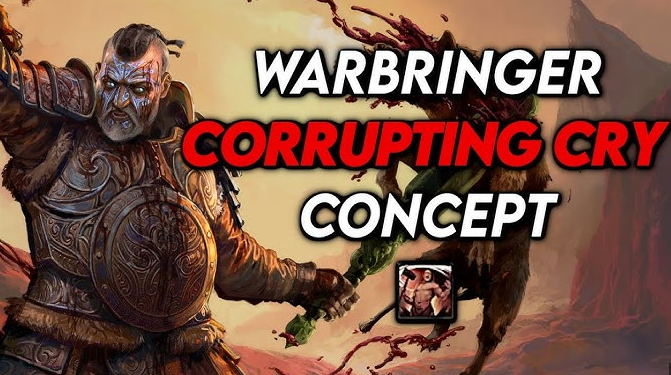
    Path of Exile 2 Patch 0.3.1: Skadoosh’s Corrupting Cry Warbringer Build

    The Corrupting Cry Warbringer build in Path of Exile 2 (PoE 2) patch 0.3.1 is one of the most creative strength-stacking setups in the entire Warlord archetype lineup. Developed by Skadoosh, this build takes full advantage of Seismic Cry, Infernal Cry, and the support gem Corrupting Cry to unleash massive damage over time, screen-wide explosions, and endless totem summons. With the reworked warcry system and the introduction of new charge-generation mechanics, this build combines high damage, durability, and simplicity – all wrapped in a one-button warcry playstyle that feels both powerful and chaotic.

    Whether you’re starting fresh, upgrading from an endgame setup, or chasing Uber-tier content, this build offers flexibility and consistent scaling through the combination of warcry speed, strength stacking, and clever weapon swapping.

    Build Concept and Overview

    At its core, the Corrupting Cry Warbringer build revolves around applying Corrupted Blood through Corrupting Cry-supported warcries like Seismic Cry and Infernal Cry. Each cry applies a stack of Corrupted Blood – dealing 25% of your total Strength as physical damage per second for 5 seconds, stacking up to 10 times. This means the build can output 250% of your Strength per second in damage over time, creating devastating screen-wide effects as enemies melt under overlapping stacks.

    To further enhance this, the build uses Hateforge, Raging Cry, Roaring Cries, and two Guatelitzi’s Soul Core of Endurance charms to produce massive Endurance Charge generation. This allows the summoning of up to 14 Ancestral Warrior Totems back-to-back – effectively maintaining permanent offensive pressure while you warcry your way through mobs and bosses.

    In essence, the build is an elegant mix of totem automation and strength-based warcry abuse that thrives on clever Path of Exile 2 Items interactions.

    How It Works

    The synergy begins with Corrupting Cry – a gem that links to your warcries, causing them to inflict Corrupted Blood. On paper, the setup seems simple, but its power comes from Warcaller’s Bellow, the Warbringer ascendancy that completely removes warcry cooldowns. This allows you to spam Seismic Cry continuously, applying stacks of Corrupted Blood nearly instantaneously.

    However, the build would struggle with mana and survivability if not for several key passives and item interactions:

    ·Urgent Call and Blood Magic on the passive tree convert warcry mana costs into life, letting you sustain through massive health pools.

    ·Second Wind III unexpectedly interacts with warcries to provide burst life recovery each time you shout.

    ·The high Strength scaling inherently grants +2 Life per point, meaning life cost remains sustainable.

    When transitioning into single-target fights, Shockwave Totem, Forge Hammer, and Earthquake take over. The weapon swap mechanic (now instant in 0.3.0+) lets you switch between your totem and shield sets seamlessly – maximizing both damage and defense.

    Weapon Set 1 focuses on Seismic Cry and Infernal Cry for damage and charge generation.

    Weapon Set 2 focuses on Ancestral Warrior Totem and Shockwave Totem, scaling skill duration and melee damage.

    Essentially, you shout, spawn totems, and let the overlapping fissures, jagged ground, and explosions from Shockwave Totem and Forge Hammer detonate everything in range.

    Strengths and Weaknesses

    Strengths:

    ·One-button, screen-clearing gameplay – massive AoE from warcries.

    ·Passive and automatic damage through Corrupted Blood.

    ·Exploding corpses prevent corpse-based mechanics.

    ·High durability thanks to huge Strength scaling and Endurance Charges.

    ·Cheap to get started – only a few key uniques required.

    ·Works with or without Hateforge (but shines with it).

    Weaknesses:

    ·Slow movement speed – the “Warrior life.”

    ·Heavy visual lag with 14+ totems active.

    ·Extremely loud due to constant warcries.

    ·Requires manual weapon swap setup for optimal efficiency.

    Gear and Stat Priorities

    For gearing, your main goals are Strength, Resistances, and Life. Secondary stats like movement speed and armor add quality of life and survivability.

    Priority List:

    1. +Strength on every possible slot.

    2. Maximum Life on armor, boots, and rings.

    3. Elemental Resistance capped at 75% (Chaos ideally 65-75%).

    4. Movement Speed on boots (at least 20%).

    5. Armor and Block Chance scaling for defense.

    Key Uniques & Setup:

    ·Hateforge – Enables back-to-back totem summoning with Rage synergy.

    ·From Nothing + Avatar of Fire – Mandatory for accessing Roaring Cries.

    ·Constricting Command – Reduces the surrounding enemy requirement for warcries.

    ·Guatelitzi’s Soul Core of Endurance (x2) – Generates Endurance Charges efficiently.

    ·Fortified Location – Ideal amulet anointment for tankiness.

    Optional gear like Astramentis or Gold Rings can provide rarity boosts for farming while maintaining the necessary Strength threshold.

    Skill Setup

    Main Skills (Weapon Set 1):

    ·Seismic Cry (linked to Corrupting Cry, Raging Cry, Infernal Cry)

    ·Fortifying Cry – Adds extra mitigation.

    Totem Setup (Weapon Set 2):

    ·Ancestral Warrior Totem

    ·Shockwave Totem

    ·Forge Hammer (linked to Jagged Ground I or Rakiata’s Flow)

    Support Skills:

    ·Charge Regulation – Replaces Dread Banner for consistent uptime.

    ·Earthquake – Provides jagged ground for Shockwave Totem detonations.

    Pro Tip:

    Hold your Seismic Cry key and tap Ancestral Warrior Totem to maximize totem uptime. Using left-click for Seismic Cry and right-click for Ancestral Warrior Totem is the optimal setup.

    Endgame Scaling

    At Uber’s endgame, the build evolves around Hateforge interactions. You’ll maintain a rotation of Raging Cry and Roaring Cries to continuously generate Endurance Charges and spam totems. Weapon swapping lets you drop 10+ totems instantly while still benefiting from shield defenses.

    Patch 0.3.1 buffs to warcry gems and the addition of Fortifying Cry further empower this build, while attribute requirement reductions make gem management easier than ever.

    Conclusion

    Skadoosh’s Corrupting Cry Warbringer Build is a masterclass in Path of Exile 2 creativity – combining brute strength with intricate mechanics like Corrupted Blood stacking, instant weapon swaps, and charge-based totem spamming. It’s one of the most satisfying builds to pilot, capable of clearing the screen with a single button while remaining durable enough for Uber content.

    If you enjoy off-meta builds, explosive visuals, and the feeling of commanding an army of war totems while shouting enemies into oblivion – this is your go-to choice for Patch 0.3.1.

    Consider boosting your progress with top-tier gear and currency – you can easily buy POE2 Currency from eld.gg to fast-track your endgame setup.

    Path of Exile 2: A Complete Guide to Raging Spirit Minions

    Path of Exile 2 introduces an array of new mechanics and skills, giving players more ways than ever to customize their builds. Among these, Raging Spirits stand out as an aggressive, high-damage minion option designed for players who want to overwhelm enemies with fiery chaos. This guide walks you through everything you need to know to build around Raging Spirits—from skill synergy and resource management to gear and strategy.

    Raging Spirits are short-lived minions summoned through fire-based spells. Unlike traditional minions that serve as tanks or distractions, Raging Spirits exist solely to deal damage. Once summoned, they immediately rush enemies and deliver bursts of fire-based melee attacks, then expire within seconds.

    Key Attributes:

    Pure Fire Damage: Scales with elemental and minion damage.

    Non-Aggro Minions: Enemies won’t target them, allowing you to act freely.

    Temporary Duration: Designed for high burst output in short windows.

    Swarm Potential: You can have up to 10 active at once.

    These traits make Raging Spirits perfect for players who favor aggressive casting and hit-and-run combat.

    How to Summon Raging Spirits

    To summon Raging Spirits, you’ll need 30 Spirit Points per cast, the primary resource for spellcasting in PoE 2. Spirits are typically conjured through spells that either directly summon them or trigger them as secondary effects.Harness the power of Raging Spirits and enhance your experience with affordable POE 2 Currency from MMOexp today!

    Recommended Spells:

    Wall of Fire:

    Summons five Raging Spirits at once and leaves behind a burning area for sustained fire damage. Excellent for area control and efficient spirit generation.

    Fire Arrow (Less Optimal):

    Can summon one spirit per cast, but is slower and less efficient in fast-paced encounters.

    Tip: Prioritize area-of-effect (AoE) fire spells that summon multiple spirits to get your full swarm into play quickly.

    Building Around Raging Spirits

    Raging Spirits thrive when supported by a build tailored to maximize fire and minion effectiveness. To make the most of them, you’ll want to optimize your passive skill tree, gear choices, and support spells.

    1.Passive Skill Tree Priorities

      Invest in the following types of nodes:

      Minion Damage: Boosts direct impact of your spirits.

      Fire/Elemental Damage: Amplifies their burning attacks.

      Minion Duration: Extends spirit lifespans, increasing uptime and DPS.

      2.Gear Selection

        Look for items that provide:

        Increased minion or fire damage

        Bonus Intelligence for spell scaling

        Cast speed, Spirit regeneration, or area damage

        Items that support critical strikes or burning effects can also enhance secondary fire damage, especially when layering with other spells.

        3.Spell Synergy

          Enhance your minions with complementary spells:

          Firestorm, Flame Surge, or Burning Ground create ongoing fire zones, perfect for weakening enemies while spirits deal direct damage.

          Spells with Ignite or Fire Exposure can further debuff enemies for increased effectiveness.

          4.Tactical Deployment

            Pre-cast before boss fights or strong encounters to start with a full swarm.

            Use spirits as an opener to draw attention and deal heavy damage instantly.

            While spirits are active, you’re free to reposition, buff, or layer other spells without risk of pulling aggro.

            Advanced Tips for Effective Gameplay

            Manage Spirit Points Wisely: Avoid draining your resource pool too early—always leave room for emergency casts or defensive spells.Get ready for greatness – buy Path of Exile 2 Currency at MMOexp now!

            Watch Enemy Resistances: Against fire-resistant enemies, augment with alternate damage types or curses like Elemental Weakness.

            Capitalize on Burst Windows: Spirits excel in situations requiring fast, overwhelming damage—use them at the start of a fight or during a boss vulnerability phase.

            Raging Spirits offer a fast-paced, high-damage minion playstyle that rewards timing, smart spell choices, and resource control. Their unique non-aggro nature lets you play aggressively and stay mobile while your minions do the heavy lifting.

            By investing in the right passives, gearing smartly, and mastering their summoning mechanics, you can turn these fiery apparitions into one of the most devastating tools in your Path of Exile 2 arsenal.

            Path of Exile 2: The Evolution of an ARPG Giant

            Path of Exile has long been the go-to for fans of dark, complex, and highly customizable action RPGs. Grinding Gear Games (GGG) has built a legacy of deep mechanics, intricate itemization, and an ever-expanding endgame. With Path of Exile 2, the stakes are even higher, promising not just an expansion but a fundamental transformation of the game itself. Let’s delve into what makes PoE 2 an exciting evolution for the franchise.

            The Essence of Path of Exile 2

            GGG has confirmed that Path of Exile 2 will be a standalone sequel while maintaining a connection to the original. This means that while new players can jump into the fresh campaign, veterans can still leverage their understanding of complex builds, mechanics, and Path of Exile 2 Currency systems. But make no mistake—PoE 2 is more than just a visual upgrade; it’s a complete overhaul of core gameplay.

            A New Era of Builds and Keystones

            Build diversity has always been the heart of Path of Exile. In PoE 2, things are getting even crazier. While some players reminisce about their favorite builds from PoE 1, like armor stackers that GGG nerfed into oblivion, others are already theorycrafting the next meta. One standout favorite among theorycrafters is the Scion—because it’s ascendancy fluid, allowing for extreme versatility in hybrid builds. Another highlight is Transcendence, a powerful Keystone that could redefine defensive mechanics in the new meta.

            The Currency Economy: Forget Mirrors, Scrolls Are King

            For many, Path of Exile‘s economy revolves around high-value orbs like the Mirror of Kalandra. But for some players, the Scroll of Wisdom is the real MVP. Identifying items might seem trivial, but it’s crucial for maintaining performance balance. If items were all auto-identified, the game could slow down considerably—something that GGG has tested in the past. So, next time you ID a piece of loot, remember: there’s a reason behind it.

            Combat and Mechanics: Fluidity and Strategy

            GGG has promised a revamped combat system in PoE 2, focusing on fluidity, impactful skill usage, and enhanced enemy AI. No longer will enemies simply be meatbags awaiting slaughter; they’ll have more sophisticated behaviors, requiring more strategic engagement.

            One of the highlights in PoE 2‘s combat is zone diversity. Imagine a zone swarming with spiders, an environment that immerses players in a twisted nightmare. The lore of Arakaali and Silk from PoE 1 resonated with many, and PoE 2 could expand on such storytelling elements with even more interactive environments.

            The Community Experience: Chaos, Excitement, and Sandpit Moments

            If there’s one thing PoE veterans love, it’s the sheer chaos of the game. Some players live for the thrill of rolling the perfect Exalted mod—others just want to farm cheap POE2 Currency efficiently. Moments like hitting a 100+ mana mod on an Exalt slam become legendary in the community, leading to celebrations (and sometimes, despair).

            And then there’s the chill factor of zones like the Sandpit. Some areas in PoE feel like an intense trial of endurance, while others let you take a breather and simply enjoy the atmosphere before diving back into the madness.

            Endgame Challenges: The True Test of Skill

            One of the greatest draws of PoE has always been its deep and varied endgame. In PoE 2, we can expect more bosses that require skill-based mechanics rather than just raw DPS. Certain fights, like the infamous stone golem boss, showcase how the game is moving towards more interactive, dynamic combat.

            Players who optimize their builds around recovery mechanics, such as 1% life and mana recovery jewels, will find themselves nearly invincible—unless, of course, they get one-shot by chaos damage. Balancing mitigation and sustain will be more crucial than ever in PoE 2.

            The Future of PoE 2: A New Generation of ARPG

            While Path of Exile 2 is still in development, everything we’ve seen so far points to a bigger, bolder, and more refined experience. Whether it’s through build diversity, advanced combat mechanics, or a deeper endgame, GGG is set to redefine what an action RPG can be.

            And let’s not forget—if you’re hitting those crazy rolls, clip it! The best moments in PoE are often the ones we don’t expect. Here’s to another era of loot, chaos, and the thrill of the grind!

            Path of Exile 2: How To Farm Ritual For Divines

            Path of Exile 2 has introduced several new mechanics that redefine endgame farming, and one of the most effective methods for acquiring POE 2 Currency, including Divine Orbs, is through Ritual Altars. One of the standout aspects of PoE 2’s endgame is the currency exchange system, which becomes available upon reaching the Cruel difficulty. This allows players to trade valuable items instead of relying on the RNG-heavy drop system. The exchange rate board further helps determine the most profitable trades, making currency management a core aspect of the game’s economy.

            How Rituals Work in Path of Exile 2

            Ritual Altars are scattered throughout maps, marked by specific waystones. Any waystone with a Ritual symbol guarantees that multiple altars will appear within the node. Players must defeat predetermined enemies at these locations, which will then revive upon altar activation.

            Each altar introduces different conditions, making fights more challenging and strategic. The five altar types include:

            Contaminated – Waves of blood sweep through the arena, affecting visibility and movement.

            Infested – A relentless tornado follows the player, forcing constant repositioning.

            Sapping – Purple clouds reduce elemental resistance, strengthening enemies inside them.

            Smothered – Explosive pods spawn and track the player before detonating.

            Tainted – Enemies explode into volatile pods upon death, creating hazardous terrain.

            Defeating enemies under Ritual conditions grants Tribute Points, which can be spent to claim or defer items at the end of a ritual. Tribute Points accumulate throughout the map but reset when transitioning to a new map.

            How to Find Rituals in Path of Exile 2

            Ritual Altars appear in maps in two primary ways:

            Randomly spawning waystones – Some nodes will naturally contain Ritual Altars.

            Using Ritual Precursor Tablets – These special items, dropped by Ritual enemies, can be applied to Watchtowers. Doing so ensures that 5 to 10 surrounding map nodes generate Ritual Altars, vastly improving farming efficiency.

            Best Strategy to Farm Rituals

            The most efficient way to farm Divine Orbs from Rituals is to maximize the number of altars encountered. The key item drops from Rituals are Omens, which can be exchanged for Divine Orbs through the POE 2 Currency trading system. However, not all Omens hold the same value. Some are practically worthless, while others can yield a significant number of Divine Orbs.

            To optimize this process:

            Prioritize maps with Ritual symbols to naturally encounter Rituals.

            Complete all available Rituals to acquire more Omens and Precursor Tablets.

            Use Precursor Tablets on Watchtowers to increase the number of Ritual nodes.

            Check the Currency Exchange board before entering a map to see which Omens are currently in demand.

            Repeating this cycle ensures a steady supply of Omens, which can then be sold for Divine Orbs or other valuable currencies.

            The Best Ritual Atlas Tree for Maximum Efficiency

            The Atlas Skill Tree includes a dedicated Ritual branch that enhances item and Tribute Point farming. Players focusing on Omens for Divine Orbs should invest in the following skills:

            From the Mists – Adds two extra monster packs to each Ritual Altar, increasing the likelihood of tablet drops.

            Spreading Darkness – Ensures that all nodes containing Rituals will always have four Altars.

            Ominous Portents – Speeds up enemy spawns and boosts Omen drop rates by 50%.

            An additional option, He Approaches, increases enemy rarity within Rituals while also improving the chance of An Audience With The King dropping. This skill is ideal for players who can handle tougher fights and want even higher rewards. However, those who prefer safer farming may opt to skip this talent.

            How to Defer Items for Later Use

            While farming POE 2 Currency and Divine Orbs, players will encounter valuable gear or crafting materials that may be too expensive to purchase immediately. Fortunately, the deferral system allows players to pay a small Tribute Point cost to lock an item in place, ensuring it appears in future Ritual Altars at a discounted price.

            This mechanic enables long-term planning and prevents losing out on rare item opportunities. Deferring high-value items is a smart strategy for anyone looking to maximize their Ritual rewards.

            Final Thoughts

            Ritual Altars offer a compelling and rewarding way to farm for Divine Orbs and other POE 2 Currency in Path of Exile 2’s endgame. While they may not directly provide build-defining upgrades, the ability to trade Omens for high-value currency makes them an essential farming method.

            By targeting Ritual nodes, using Precursor Tablets, optimizing the Atlas Tree, and strategically deferring items, players can efficiently amass wealth and gear while minimizing the reliance on RNG. Whether playing solo or in a group, mastering Ritual farming is a key step toward dominating Path of Exile 2’s economy.

            So, prepare your build, stock up on watchtower upgrades, and start farming Ritual Altars today—your Divine Orbs and POE 2 Currency fortune awaits!